Every business wants to grow. Few realize that growth doesn't usually fail because of competition, market conditions, or even a lack of innovation. More often, it slows under the weight of its own complexity.
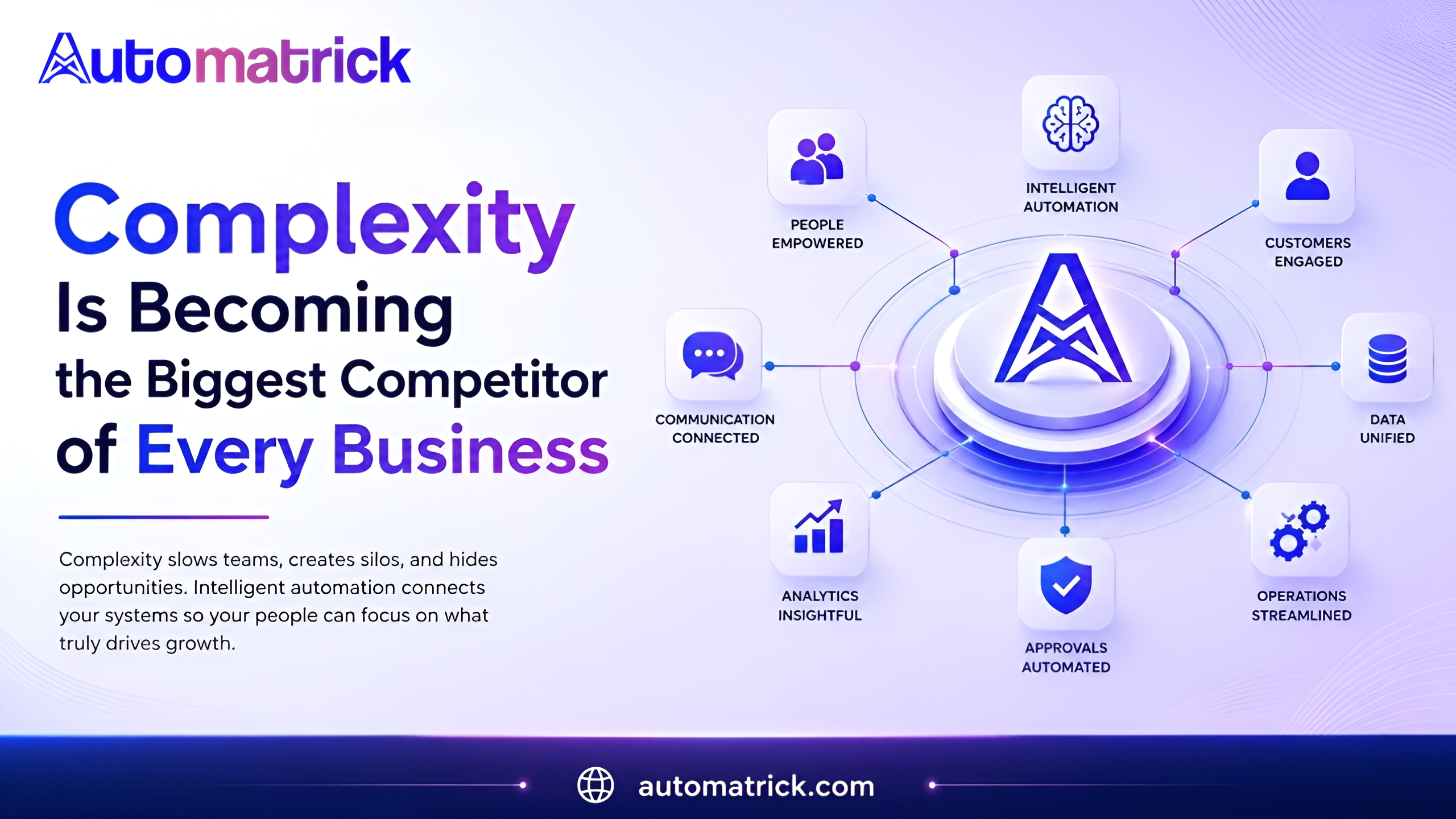
As organizations expand, they add more people, more processes, more approvals, more applications, more communication channels, and more data. Each addition solves an immediate problem, but collectively they create something far more dangerous, operational complexity. Teams begin spending more time coordinating work than creating value. Decisions slow down, information becomes fragmented, and opportunities quietly disappear in the gaps between systems.
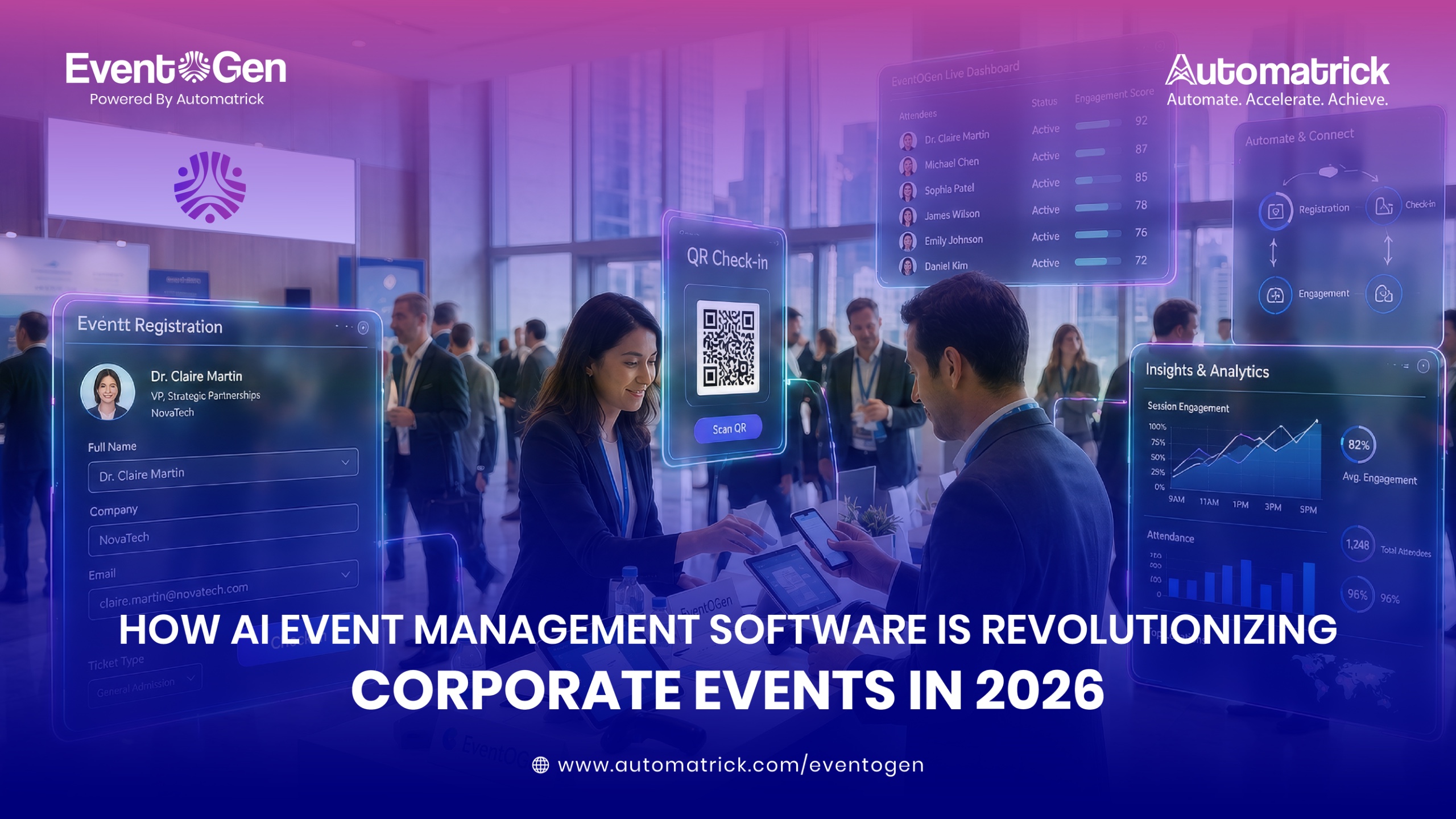
For years, businesses responded by buying more software. Yet software alone rarely removes complexity. In many cases, it simply digitizes it. A new CRM doesn't automatically improve customer engagement if sales conversations remain scattered across emails, spreadsheets, and messaging platforms. An event platform doesn't transform attendee experiences if registrations, speakers, networking, travel, certificates, and follow-ups still live in separate workflows. Technology without orchestration simply replaces manual chaos with digital chaos.
The organizations pulling ahead are approaching the problem differently. Instead of asking how individual tasks can be automated, they are redesigning how work flows across the entire organization. They are connecting operations, customer engagement, communication, approvals, analytics, and decision-making into intelligent ecosystems where information moves seamlessly and routine work happens automatically. The objective is no longer efficiency alone.
It is clarity, agility, and the ability to scale without multiplying complexity.
Artificial intelligence is accelerating this transformation, but AI is only valuable when it becomes part of a connected operational ecosystem. Intelligence without action creates impressive dashboards. Intelligence combined with automation creates momentum. When repetitive work disappears, people don't become less important, they become free to focus on strategy, creativity, innovation, and relationships, the areas where human judgment creates the greatest value.
This shift represents a new way of thinking about business technology. Success will no longer belong to organizations that own the most software. It will belong to those that build the simplest operating model. In the years ahead, competitive advantage will come from businesses that remove friction, connect systems, and transform complexity into intelligent execution.
Also Read: Why business automation is no longer an option in 2026?
That is the philosophy behind modern business automation. The goal is not to replace people with technology. It is to remove the barriers that prevent people from doing their best work. Whether that means orchestrating complex events through EventOGen, transforming post-event engagement with SnapOGen, accelerating customer acquisition through Tap2Sales, streamlining recruitment with Hireasily, or simplifying wedding management with WeddiPro, the larger vision remains the same: create connected ecosystems where technology quietly works in the background, allowing businesses to focus on growth.